header image
Take the Challenge
Free --- Five Life-Saving Lessons You Can Use Now
Practice Vern's Lessons
 
 
Live Your Dream, Fly the Adventure
Experience Real Bush, Mountain,
and Seaplane Flying in Moose Pass, Alaska
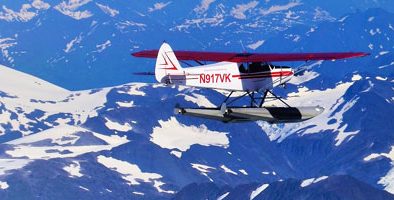
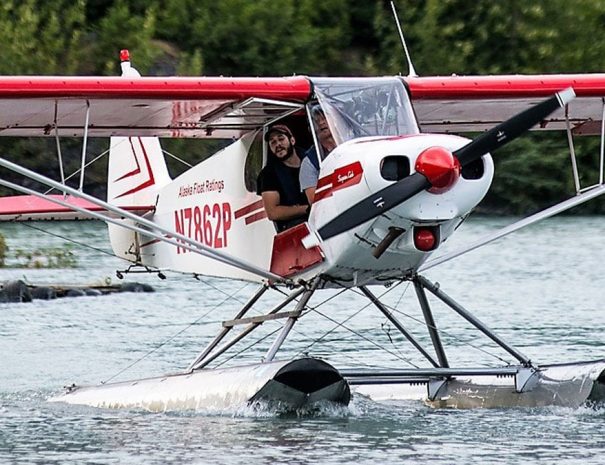
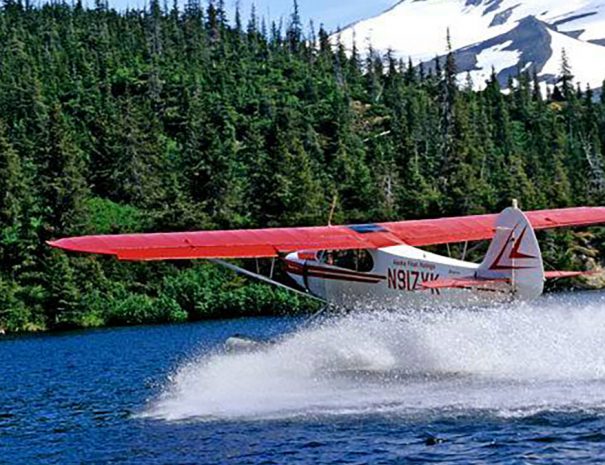
Fly a PA-18 Super Cub - The Ultimate Alaskan Bush Plane 
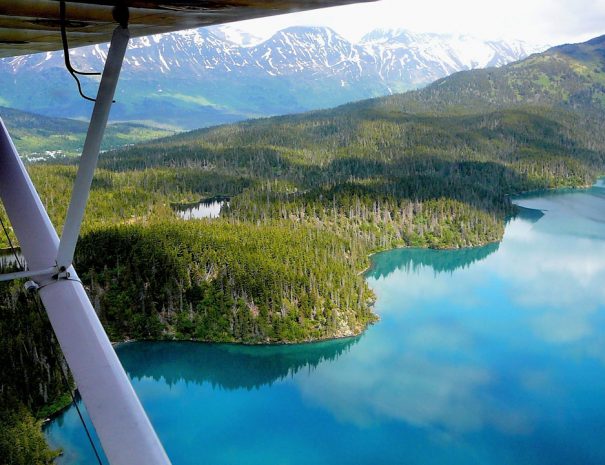
 "It's like flying on a magic carpet. Set it at 2100 RPM, one notch of flaps
and just float around the sky. You can soar with the eagles, 
fly abeam Dall sheep and mountain goats way up high,
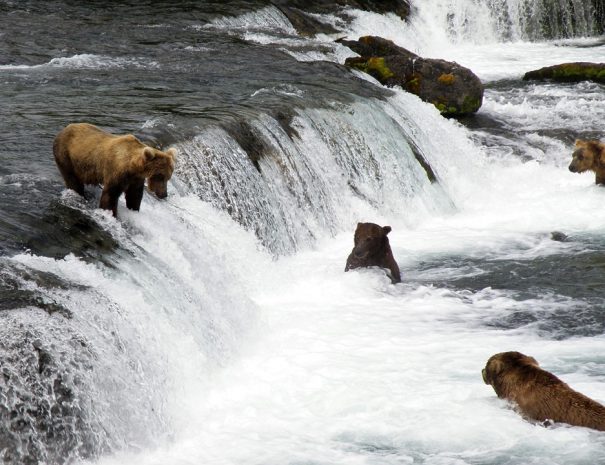
see a black bear looking for berries, or a grizzly bear catching salmon.
All just minutes from Trail Lake base."  Vern

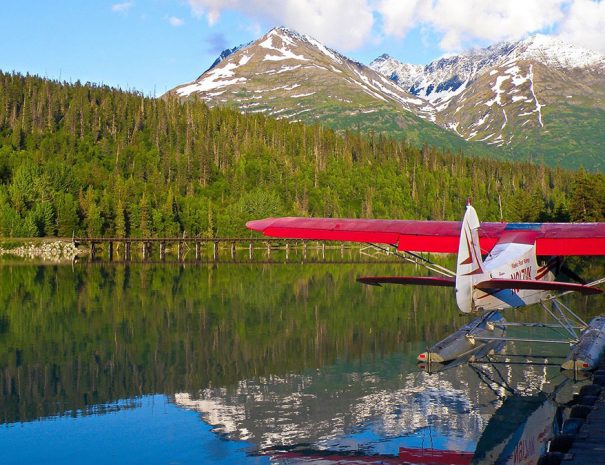
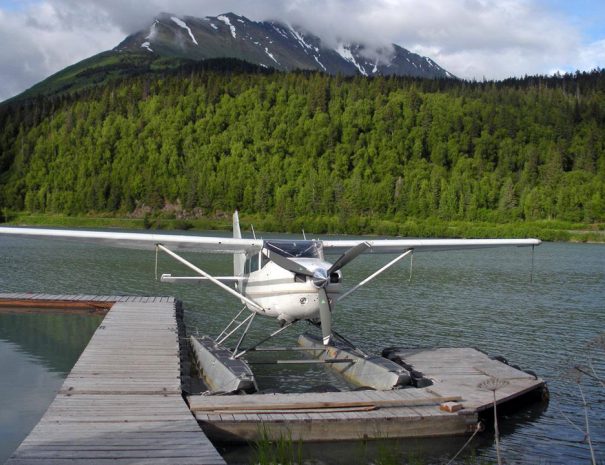
62P on shore in fall 

N62P on Upper Trail Lake shore in September.
Looks similar to mid-May soon after the lake thaws.

Read more...
Welcome to

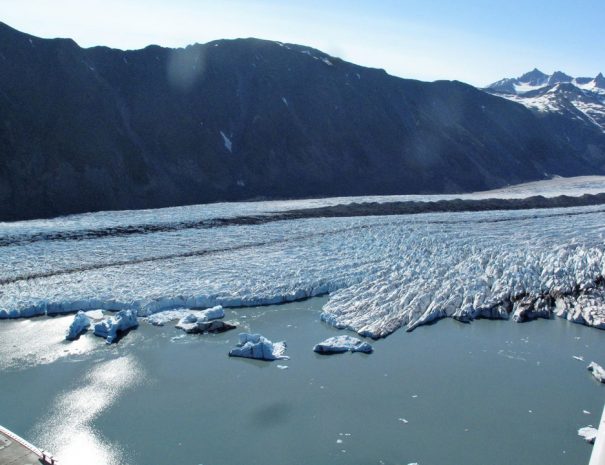
Alaska Float RatingsIcebergs from Cub


If you are not completely satisfied with your                     
  •    flying skills,
  •    emergency procedures,
  •    mountain-flying techniques....

  This is the flight school for you!

"Alaska Float Ratings has the most professional, comprehensive, and organized course I have experienced in the civilian world." Former USAF F-15 pilot, now airline pilot.

"I highly recommend Alaska Float Ratings." J.J. Frey, former President of EDO Corporation and author of How to Fly Floats.

Click here to read Vern's latest lesson. It is a continuation of Lesson Four.  Lesson Five - Energy Management.

Please study this website. We'll be glad to answer your questions. 

We still have quite a few openings, though some dates are fully booked. Look at Get Started - Registration for availability from July to mid-September 2010.

Contact us at:  

  800 478 - 1449     or    e-mail:  

Alaska Floatplane Safari

If you’ve always dreamed of being a bush pilot flying a Super Cub on floats around Alaska, experiencing the thrill of flying over glaciers, landing on remote mountain lakes, and listening to the sounds of nature, then book our Alaska Floatplane Safari

If you bring a spouse, friend, or relative fly in our Cessna 172 on floats. Or if you bring your family or friends fly in our Cessna U206 on our Alaska Floatplane Safari .

Floatplane at Lake Hood

*** We will base an airplane again at Lake Hood in Anchorage for pilots on layovers, corporate pilots with short stays, and pilots who don’t have time to come to Moose Pass who want an Introductory Seaplane Lesson, or a Float Refresher Flight.***

Read more...
2010

The 2010 summer - mountain flying, seaplane flying, and floatplane safaris - is nearly here. Some activities you may be able to read about, but flying is such a kinetic skill you must perform the movements yourself. Doing it with a CFI behind you in the Super Cub is an effective way of learning while keeping you safe to practice new flying techniques. 

Our same pilot/CFI crew will be back again this year. They sure know the terrain and weather conditions in our locale. See below to read about Darlene flying her Luscombe from California to Alaska in May.

Guess who stopped by to say "hello?"  Ted Contri is one of our former students. The P51 in the background is his. We have the photo hung in the pilot classroom here in Moose Pass. Ted flew in the Reno Air Races in 1992 and 1993.

He and a buddy had been to the Valdez Fly-In where the shortest take-off and shortest landing contests are held. Ted watched Paul Claus of Ultima Thule Lodge and his son compete. Paul is also one of our former float students. He told us he wouldn't have gone anywhere else for his seaplane rating. 

Ted-Contri-and-Vern-email
Ted Contri (left) and one of his P51s with Vern.

And guess who flew her airplane to Alaska this spring? She loves flying her yellow plane, but she also loves flying our Super Cubs on floats at Moose Pass. Darlene, our chief instructor, flew her Luscombe from California to Alaska in May. Here's a link to an article that appeared in a California newspaper, Pasadena-Star News

I just read on the internet that "America’s 49th state is now one of 49 National Heritage Areas across the Nation. The designation of Alaska’s Kenai Mountains-Turnagain Arm as a National Heritage Area recognizes this geographic corridor as a place that offers a unique contribution to the fabric of our country.

The Kenai Mountains-Turnagain Arm National Heritage Area encompasses a distinctive landscape of mountains, lakes, rivers and fjords. It is a place whose valleys and mountains, communities and people tell the larger story of a wild place and a rugged frontier. Come journey through an Alaskan landscape that is rich in natural, cultural, historic and scenic wonders."  Moose Pass is in the middle of all this!

Seaplane Rating in Alaska: The Experience of a Lifetime!

By Mario Simoes in Aviation General (Hangar talk) 2009

A few weeks ago, I earned my seaplane rating in Moose Pass, Alaska. I had contemplated other flights schools located throughout the country before deciding on Alaska Float Ratings; it is hard to describe how glad I am about my final decision. Although I went to Moose Pass to get my float rating, what I received in return was a lot more than just a rating; it was an experience of a lifetime, as I will attempt to put into words in the paragraphs that follow.

As is usually the case, before deciding on a flight school, I started with some well-deserved research. I had (and have) been looking for a flying job in Alaska and felt that a seaplane rating would increase my marketability in the 49th State. Nevertheless, due to cost considerations, I never thought that Alaska would be a viable option to get the new rating; needless to say, I was wrong!

During my research, it did not take long to realize that seaplanes and Alaska share(d) a common historical background and, before long, rather than looking for a flight school I was reading articles about the early days of Alaska bush flying on floats. I am fortunate to have flown jets above the speed-of-sound; to have flown twin-turboprops throughout most of the islands of the Caribbean; and even fortunate to afford my own Cirrus. Nevertheless, as I read about flying seaplanes in Alaska, I was struck with that horrible feeling that something big was missing in my flying experience portfolio. With that realization, I called Alaska Float Ratings and put down my deposit. As the website home-page stated, I wanted to “experience real bush flying in Moose Pass” – and why not? After all, I was in the process of seeking a flying job in Alaska.

Moose Pass rests on a flat patch of land adjacent to Trail Lake, some 97 miles south of Anchorage. My GPS indicated that the drive from Anchorage would take about 1 ½ hours. And so, with a full tank of gas and a completely charged digital camera, I headed south on the Seward Highway. I was on my own schedule, free to stop as often as I wished, which turned out to be quite a lot. The drive itself is worth a few full pages of narrative, but I will leave that for another time. Suffice to say that rather than 1 ½ hours of driving time, it took me just over 3 hours to reach my destination.

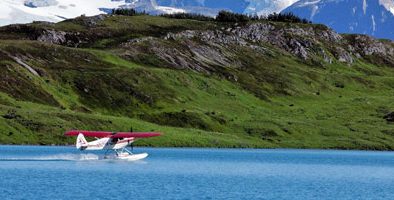
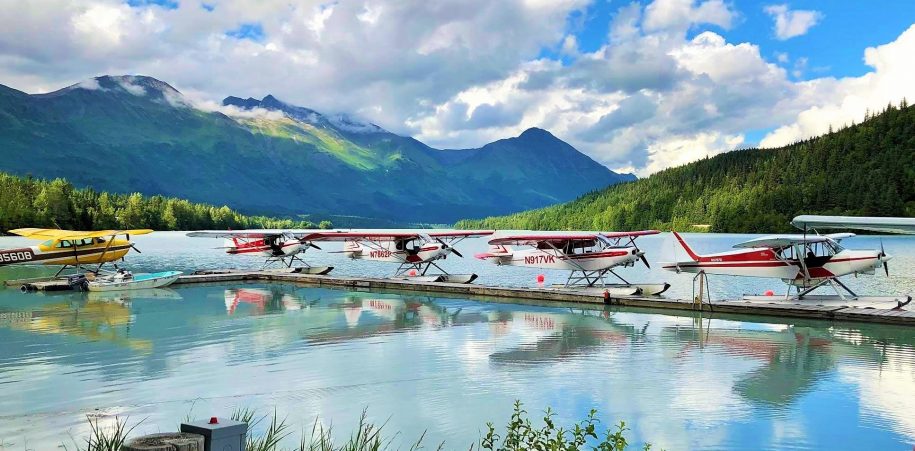
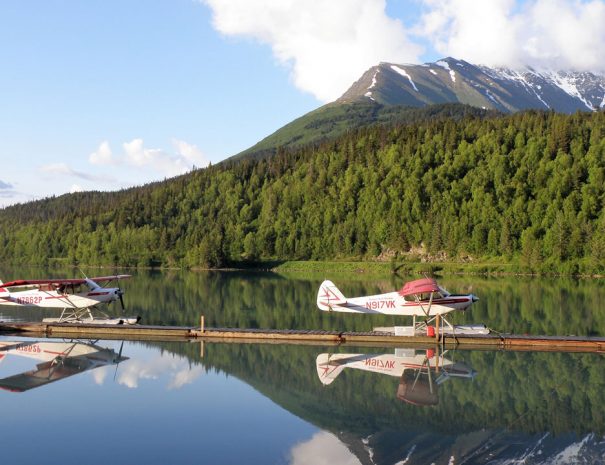
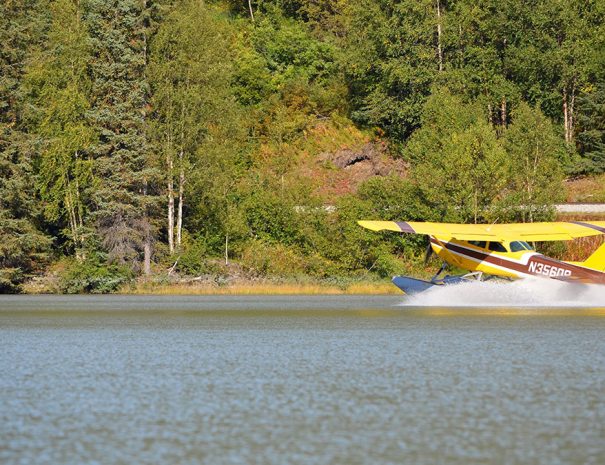
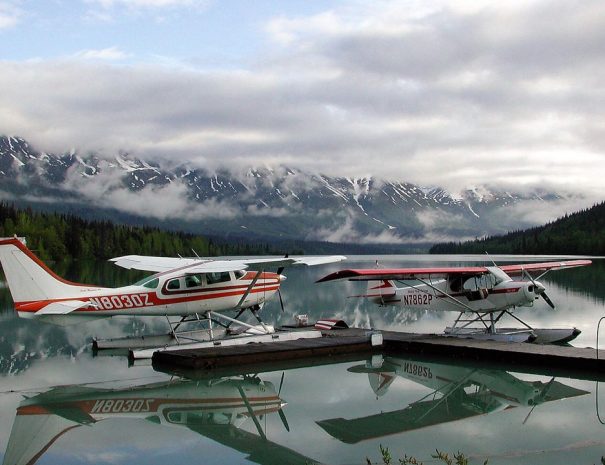
I had chosen the “Optimal Course,” which provided me with 10 hours of flight time and 3-5 hours of ground instruction to “master” my newly-sought flying skills. Ideally, I had been told that if I flew 2-3 times per day, I should be done in 4-5 days. In an abundance of caution, I had planned to stay in Moose Pass a full week. As I parked the car, Lura met me at the front of the school, and after a warm welcome I found myself admiring the beauty that surrounded me: Trail Lake was framed by majestic mountains and the lake’s calm water reflected the 2 docked Super Cubs, as if standing on a giant mirror.

While I was standing on the dock, Vern Kingsford introduced himself as the owner of the school and the FAA Designated Examiner. While this dual role would constantly test the average person’s conflict of interest standing, Vern has no such issues. In fact, there were times during my training I wished otherwise. It is hard to accurately describe Vern Kingsford, in part due to his complex nature. It was easy, however, to listen to his life experiences as a pilot in Alaska and as a well-travelled man. Ground-knowledge quizzes, however, cannot be described as easy. In fact, while Vern was quick to underscore my strengths, he was quicker in identifying my shortcomings. After a few embarrassing moments, I increased the level of self-studying, not in preparation for the checkride, but in preparation for my next conversation with Vern. After 8 days interacting with Vern, I learned to admire him as a person and a pilot, and, as I write this post, I miss the long conversations we had at the end of the day while drinking a good 10 Year-Old Port. 

Darlene, my flight instructor, guided me through the quasi-military syllabus and flight training as skilled professional – a rarity in today’s flight training reality. I was taken out of my comfort zone and challenged in ways I haven’t been since my days at the Air Force. If I got too comfortable at one lake, I would immediately be directed to another. Moose Pass is surrounded by several lakes, of several sizes, at different altitudes, and all surrounded by unforgiving terrain. Winds and water conditions often changed radically from lake to lake; this dynamic flying environment constantly tested how prepared I was for any given flight. In addition, I actually had to fly the airplane; stick and rudder in its basic form, with energy management always on the background. There was no autopilot, no attitude indicator, no GPS, no XM radio, no runways, no signs, no ATC, and no weather reports. For the first time in a long time, I actually felt like a pilot and not a systems’ manager, and I will be back next year for more advanced training.

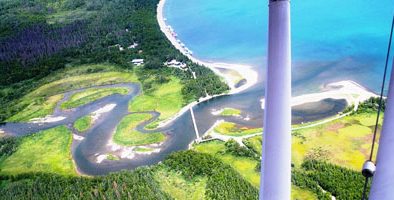
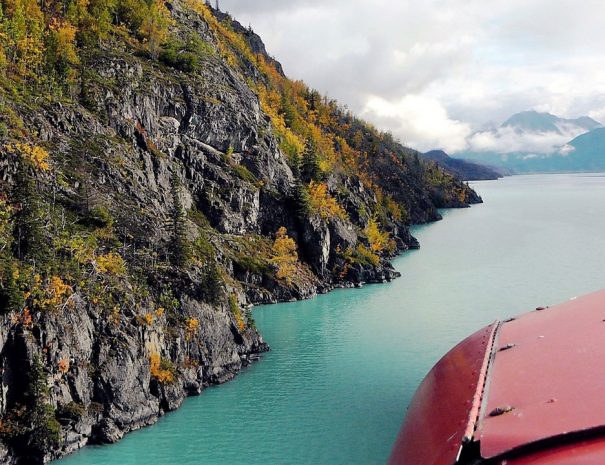
For the most part, my time at Moose Pass was consumed by self-study and flight visualization (aka chair-flying). The written test alone (in preparation for the oral examination) consisted of over 100 questions and took me the better part of 12 hours to complete. In short, you cannot buy your seaplane rating at Alaska Float Ratings; you will have to earn it. Despite the busy schedule, there was enough time to interact with the other pilots seeking their float rating, which included the Captain of the B747 that transports the Space Shuttle from California to Florida. The classroom walls were peppered with pictures of former students: astronauts, airline captains, airline chief pilots, fighter pilots, and professional bush pilots. Despite such diversity, one could easily see a common trait to all those pilots: they were not deterred by challenge; they sought it and welcomed it. After my checkride, Darlene and Vern took me on a couple of sightseeing flights over the Kenai Peninsula. There are no words to describe the scale and natural beauty of this part of Alaska, and the cliché “a picture is worth a thousand words” is right on target. 

Not only do I recommend that you get your seaplane rating in Moose Pass, but I also challenge you to do so. If you really want to know what kind of pilot you are, get your float training at AFR and take the checkride with Vern. For those excellent-above-average pilots out there, you will be rewarded by constant praise and recognition. For those of you like me, you will have your weak(er) skills identified, isolated, eliminated, and re-trained. In any case, despite some foreseeable frustrating moments, you will come out of Moose Pass a better, safer, more knowledgeable and confident pilot. During your training, you will have had the opportunity to fly in one of the most beautiful and challenging places in the world. You will not regret it! 

Read more...
Student Quotes

I had just three days here, but they are as big and memorable as many a three-year period of my life. Skills I learned with Alaska Float Ratings have taken me on to acrobatic flying and to appreciate that regular ongoing training is the best insurance to safe flying.  Those who have been in a flight emergency are the same who say training is the reason why we walked away from it. Alaska Float Ratings makes training fun, challenging and exciting.

Steve W., 2006